Holiday Christmas Ballerina Clipart: A Designer’s Review
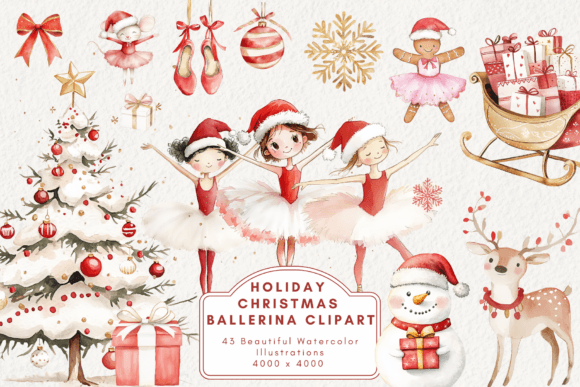
As an embroidery designer who has spent countless hours digitizing and stitching out holiday motifs, I approach every new asset with a mix of excitement and skepticism. We all know the drill: a design looks stunning on a screen but can turn into a tangled mess of thread breaks and puckering once it hits the fabric. When I first pulled up the Holiday Christmas Ballerina Clipart, my immediate reaction was one of cautious optimism. It sits squarely in the category of Illustrations, offering a whimsical blend of classical dance and festive cheer that is increasingly popular in boutique markets.
The visual personality of this piece is delicate yet distinct. It captures the grace of a ballerina while integrating subtle holiday elements, creating a mood that is elegant rather than overly cartoonish. For those of us running small shops or selling on Etsy, finding that balance between cute and sophisticated is key to commanding higher price points. This isn’t just a generic snowflake; it is a character-driven piece that tells a story. But does it translate well to thread? Let’s break down how this design performs in real-world embroidery projects.
First Impressions and Visual Appeal
The layout of the Holiday Christmas Ballerina Clipart suggests a focus on silhouette and flow. In embroidery, clean lines are everything. If the original illustration relies too heavily on gradients or ultra-fine details, it often fails when converted to stitch data. However, looking at the structure here, the shapes appear bold enough to hold their integrity. The theme naturally lends itself to winter collections, nursery decor, and personalized gifts.
When evaluating any digital embroidery file or design asset intended for conversion, I look for clear separation between elements. This clipart seems to offer that clarity. The ballerina’s pose likely involves extended limbs and a tutu, which means we need to pay close attention to how these areas are stitched. Are they filled with dense satin stitch, or do they utilize lighter fill stitches to maintain flexibility? These are the questions that determine whether a finished product feels premium or cheap.
Real-World Application: From Tote Bags to Sweatshirts
To truly test the viability of this design, I imagined placing it on several common substrates. Let’s start with a custom embroidered tote bag. Canvas is sturdy and handles stitch density well. Placing the Holiday Christmas Ballerina Clipart on a natural cotton tote creates a charming holiday gift option. The contrast between the thread colors and the fabric texture would be striking, especially if using metallic or variegated threads for the festive accents.
Moving to apparel, consider a high-quality sweatshirt. Fleece and French terry fabrics have a nap that can swallow small details. Here, the size of the design matters immensely. If the ballerina is too small, her features will get lost in the fabric pile. I would recommend scaling this up for upper-chest placement or going larger for a full-back design. For baby embroidery, such as a onesie or a burp cloth, the softness of the garment requires a lighter touch. You would need to ensure the stitch density is reduced to prevent the fabric from stiffening, which is crucial for items touching sensitive skin.
Another excellent application is an embroidered patch. Patches allow for higher stitch density because they are stabilized by a backing material before being applied to the final garment. This makes them ideal for complex illustrations where you want vibrant color saturation without worrying about fabric distortion. A patch featuring this ballerina could be a standout item for a craft business, easily applied to jackets, hats, or bags later.
Navigating Technical Challenges
While the aesthetic is strong, there are practical hurdles to consider. Curved surfaces, like caps or beanies, present a challenge for any design with horizontal width. If the Holiday Christmas Ballerina Clipart is wide, it may distort when stitched onto a rounded crown. In such cases, I advise testing on a curved hoop or adjusting the design width to fit the available space without stretching the image.
Dark fabrics are another consideration. If you are stitching on navy or black fleece, you must ensure your thread colors have enough contrast. Light pastels or bright whites will pop, but muted tones might disappear. Always test your thread palette on scrap fabric first. Additionally, check the stitch density. High-density areas can cause puckering, especially on stretchy fabrics like jersey knits. Using a proper stabilizer—cut-away for stretchy materials and tear-away for stable wovens—is non-negotiable for a professional finish.
Commercial Viability and Brand Consistency
For Etsy sellers and handmade shop owners, the perceived value of a product is tied to its execution. A crisp, well-stitched Holiday Christmas Ballerina Clipart signals professionalism. It builds customer trust and encourages repeat business. When used in printable mockups or digital product previews, this illustration can help visualize the end result, boosting buyer engagement.
However, before listing any finished product, you must confirm licensing. Just because a file is labeled as a digital embroidery file or clipart does not automatically grant commercial rights. Always read the terms provided by the creator. If the license allows for commercial use, you can confidently incorporate this into your small shop product line, whether as standalone apparel or as part of a curated gift set.
Practical Designer Notes
- Test on Scrap Fabric: Never stitch directly on your final garment. Use similar weight and texture scraps to check for registration issues.
- Check Thread Contrast: View your design in black and white to ensure the shapes remain distinct without color reliance.
- Review Stitch Density: Ensure the fill stitches are not too dense for lightweight fabrics to avoid stiffness.
- Confirm Hoop Size: Make sure the design fits within your machine’s maximum hoop area, leaving room for stabilization.
- Inspect Small Details: Zoom in on the digital file to see if tiny elements like facial features or jewelry are simplified enough for embroidery.
- Use Proper Stabilizer: Match the stabilizer to the fabric type to prevent shifting and puckering during stitching.
In conclusion, the Holiday Christmas Ballerina Clipart offers a delightful fusion of elegance and festivity. It is versatile enough for various applications, from holiday embroidery on kitchen towels to sophisticated embellishments on boutique clothing. By paying attention to technical details like stitch density, fabric choice, and stabilization, you can transform this digital asset into a high-quality handmade product. Whether you are a hobbyist creating personalized gifts or a seasoned entrepreneur expanding your craft business, this design holds promise. Just remember to do your due diligence with testing and licensing, and let your craftsmanship shine through every stitch.